Rehabilitation and pain management for dogs and cats
If your dog or cat is struggling with a joint condition or an injury, rehabilitation can help.
Rehabilitation helps pets in three ways:
- Faster healing after an injury or surgery
- Better mobility in an injured limb
- A higher quality of life, especially for pets with chronic conditions
It is a non-drug therapy, so it is an option for pets that cannot tolerate certain medications. It is often paired with exercise, nutrition plans and home modifications, and it works well alongside medication. We build a plan around your pet's needs and your goals for their health.
What conditions can veterinary rehabilitation treat?
- Osteoarthritis
- Recovery from orthopedic surgery
- Soft-tissue injuries
- Spinal cord injuries
- Joint injuries
- Wounds
These conditions are more common in older pets, but we see patients of all ages.
What types of rehabilitation does FM 1488 offer?
- Therapeutic exercise: improves strength, flexibility, balance and coordination, and can slow the progression of disease.
- Manual therapy: passive range of motion, massage and joint mobilization for greater joint movement and pain relief.
- Pulsed electromagnetic field (PEMF) therapy: pulsing electromagnetic fields to speed healing, reduce inflammation and relieve pain. Your pet lies on our large PEMF mat for a set time.
- Laser therapy: light energy to stimulate tissue repair and manage pain. It helps with muscle and joint pain, arthritis symptoms, muscle spasms and blood flow to a specific area.
- Thermotherapy: heat to increase blood flow and relax muscles, often before stretching, and cold to reduce inflammation and pain.
- Land treadmill: walking that improves cardiac function, joint flexibility, muscle tone and coordination.
What does a rehab treatment plan include?
- Medications or supplements
- Nutrition advice
- Home modification suggestions
- Exercise routines to do at home
- In-clinic therapies
- Follow-up rehabilitation consultations every 4 to 8 weeks to check progress
Rehabilitation takes work at home and at the clinic, and we help at every step. Your pet spends time in our dedicated rehabilitation room, which has indoor and outdoor therapeutic equipment.
Who leads the rehabilitation program?
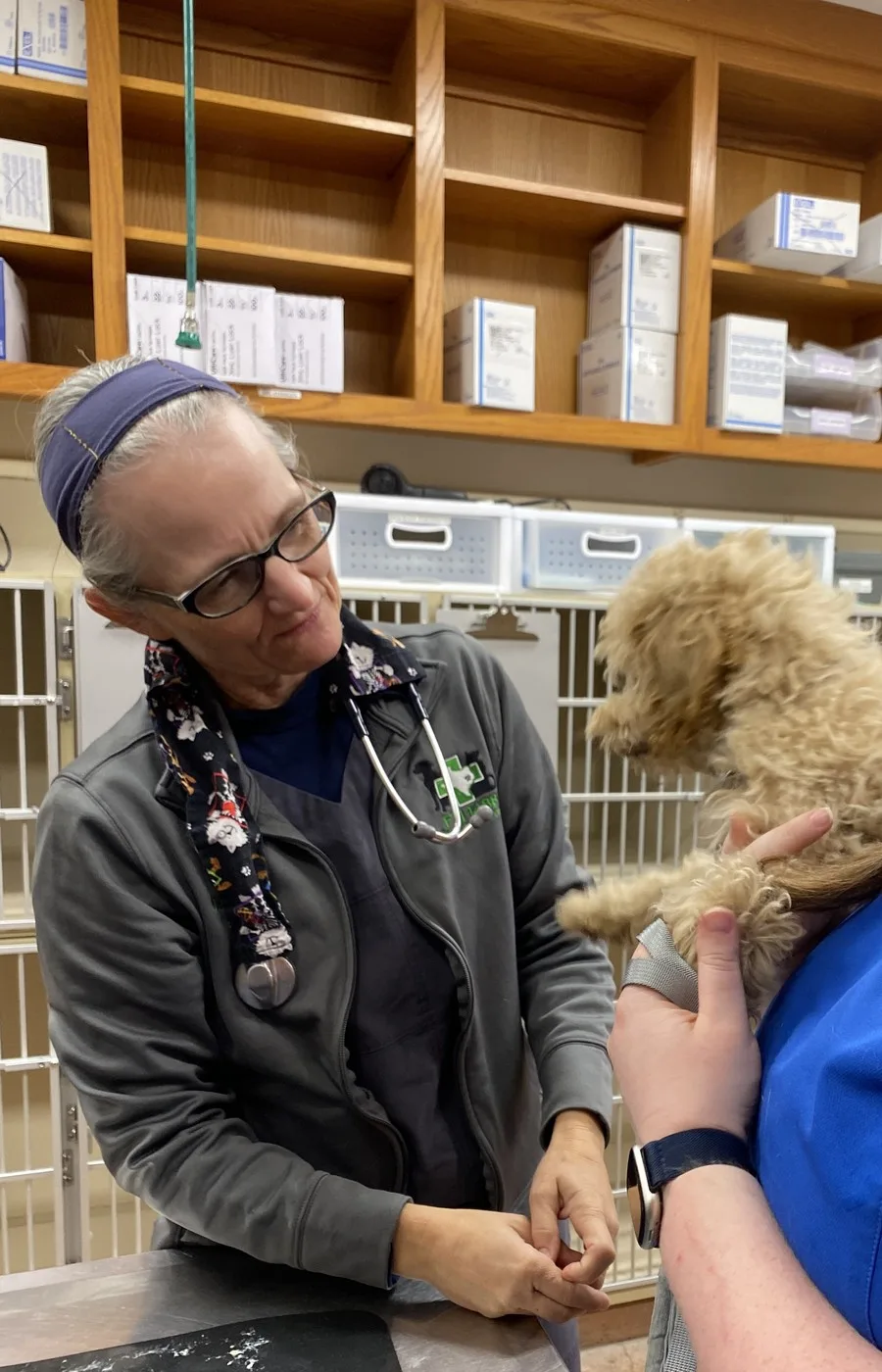
Dr. Wendy Green, DABVP, CCAT oversees the program. She is a Diplomate of the American Board of Veterinary Practitioners in canine and feline practice and has earned her certification in physical rehabilitation for companion animals.
Jessica Muratorri, LVT, CCAT is our licensed veterinary technician and the lead technician for the program. She earned her associate degree in veterinary technology from Lone Star College–Tomball in 2017, became licensed in Texas in 2019, and is certified in companion animal therapy.
What does the first rehab visit include?
The first visit is a rehabilitation consultation with Dr. Wendy Green. She sees rehabilitation consultations on Mondays, Tuesdays, and Fridays. You do not need a referral. Referrals from your primary veterinarian are welcome.
The plan from that visit can include medications or supplements, nutrition advice, changes at home, exercise to do at home, and in-clinic therapies such as laser, PEMF, thermotherapy, manual therapy, and the land treadmill. Follow-up consultations are every 4 to 8 weeks to check progress.
How do I schedule a rehab consultation?
Dr. Green sees rehabilitation consultations on Mondays, Tuesdays and Fridays. Call, email or text us at (281) 259-8806 to set one up. Referrals from your primary veterinarian are welcome, and you do not need one to schedule. We are glad to work with your veterinarian to keep your pet's care continuous.
Request an appointment Call (281) 259-8806
Common questions
Do I need a referral for pet rehabilitation in Magnolia?
No. Referrals from your primary veterinarian are welcome, but you do not need one to schedule a rehabilitation consultation at FM 1488.
Is rehabilitation available for cats?
Yes. Our rehabilitation program treats both dogs and cats with joint conditions, injuries and recovery after surgery.
Which days are rehab consultations?
Dr. Green sees rehabilitation consultations on Mondays, Tuesdays and Fridays. Call or text (281) 259-8806 to set one up.
Who does pet rehabilitation help?
Dogs and cats with osteoarthritis, recovery after orthopedic surgery, soft-tissue injuries, spinal cord injuries, joint injuries, or wounds. These conditions are more common in older pets, and we see patients of all ages. It is also an option for pets that cannot tolerate certain medications, and it can be paired with medication.
What happens at the first rehab visit?
It is a consultation with Dr. Wendy Green, DABVP, CCAT. You do not need a referral. The plan can include medication or supplements, nutrition advice, home changes, home exercise, and in-clinic therapy. Follow-up consultations are every 4 to 8 weeks.
How often are follow-up rehab visits?
Follow-up rehabilitation consultations are every 4 to 8 weeks to check progress.
How long is a session, and how many will my pet need?
There is no typical number. Session length and the number of sessions depend on your pet's diagnosis and size, and on your goals for your pet.